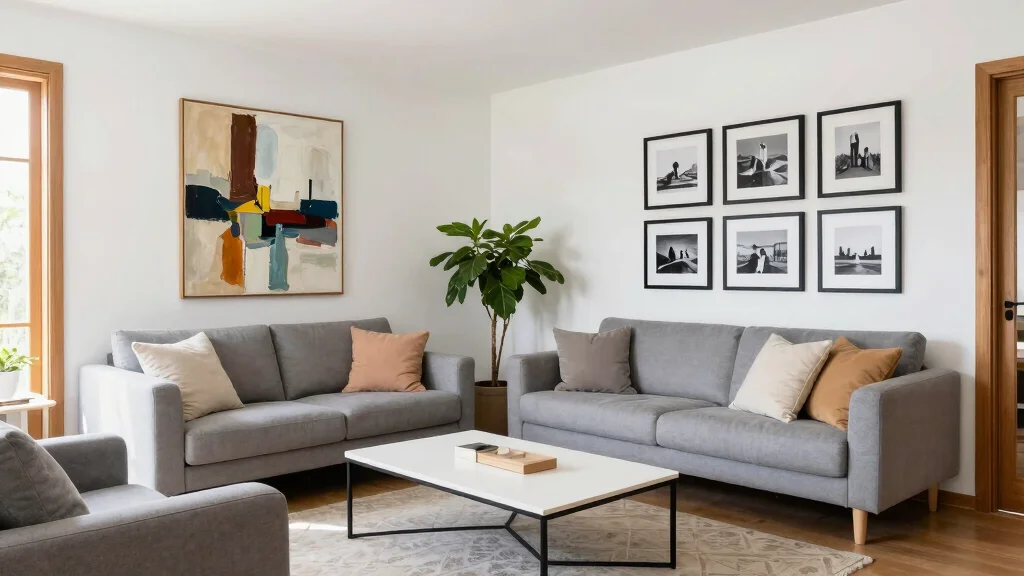
Every now and then, you find yourself craving a change in your living space. With the right touch, your living room can transform from mundane to magnificent. That’s why I put together this post: to share 14 living room wall design ideas that will elevate your home decor game. Whether you’re looking to enhance minimalism with a sleek design or add a pop of modern wall art, there’s something here for everyone.
If you’re someone who enjoys home decor and loves creating a polished look in your space, this guide is for you. From bold accent wall ideas to minimalist wall art, you’ll discover a range of styles that cater to various tastes. These ideas not only beautify your walls but also reflect your personality, making your living room a true sanctuary.
In this post, you’ll gain practical insights into how to incorporate trendy decorative wall panels, explore gallery wall inspiration, and understand current wall color trends. Each idea is designed to help you craft a living room that feels comfortable and thoughtfully designed. So, let’s dive into these living room wall designs that will inspire your next interior project!
Key Takeaways
– Explore Minimalist Color Palettes: A simple color scheme can create a serene atmosphere, making your living room feel more spacious and inviting.
– Incorporate Textured Wall Panels: Adding depth with textured panels not only looks stylish but also enhances the overall decor of the room.
– Get Inspired by Gallery Walls: Create a personalized gallery wall that showcases your favorite art or photographs, adding a touch of uniqueness to your space.
– Consider Bold Accent Walls: A statement wall in a vibrant color can serve as a focal point, instantly elevating the room’s aesthetic.
– Embrace Soft Wall Colors: Gentle hues are great for creating a calm environment, making your living room an ideal spot for relaxation.
Recommended Products

Real 3D Design: Diamond pattern with 1 inch raise design makes our wall panels more eye-catching. A box comes in 33 tiles, which covers 32.Sq.Ft.

Real 3D Design: Diamond pattern with 1 inch raise design makes our wall panels more eye-catching. A box comes in 33 tiles, which covers 32.Sq.Ft.

Superior Acoustic Performance–Crafted from high-density polyester fiber, these groove-patterned panels are engineered for superior sound absorption. The linear channels help trap and diffuse sound more effectively, reducing echo and enhancing acoustic clarity across larger surface areas.
1. Minimalist Color Palette
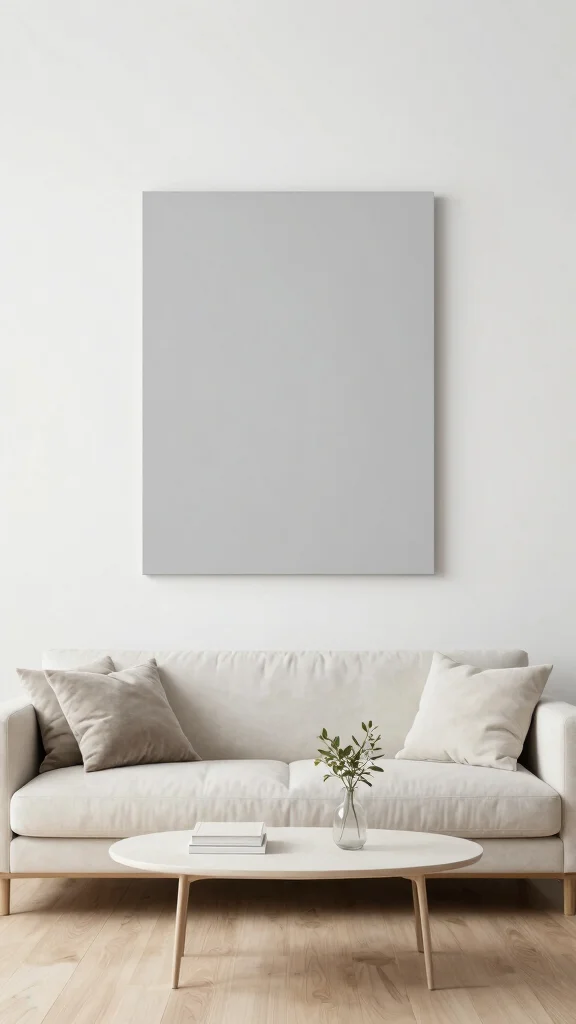
A minimalist color palette creates a serene atmosphere in your living room, inviting calmness and clarity. By focusing on just a few complementary hues, you can achieve a sense of visual harmony that feels both stylish and timeless. Think of soft whites, gentle greys, and warm beiges that work together to create a peaceful retreat. Adding a darker accent wall can provide depth and sophistication without overwhelming the space. Pair this design with minimalist decor, such as simple art pieces or monochromatic frames that enhance your chosen palette.
To implement this look, consider budget-friendly paint options and decor items that align with your vision. Mixing textures, like cozy throws and textured cushions, can add warmth without complicating the color scheme. This approach connects to the broader trend of creating tranquil spaces that promote relaxation and mindfulness.
Consider these tips to maximize your minimalist palette:
– Stick to 2-3 colors for cohesive appeal.
– Choose wall art that incorporates your palette to enhance unity.
– Use soft textures like throws or cushions to add warmth.
– Avoid busy patterns that distract from simplicity.
This style emphasizes a clean and sophisticated aesthetic, where textures and materials play a vital role in enhancing the overall look.
Recommended Products


【Canvas Art Size】: 12×16 inch. UNFRAMED.Please note: Our art is 12×16 inch.
2. Textured Wall Panels
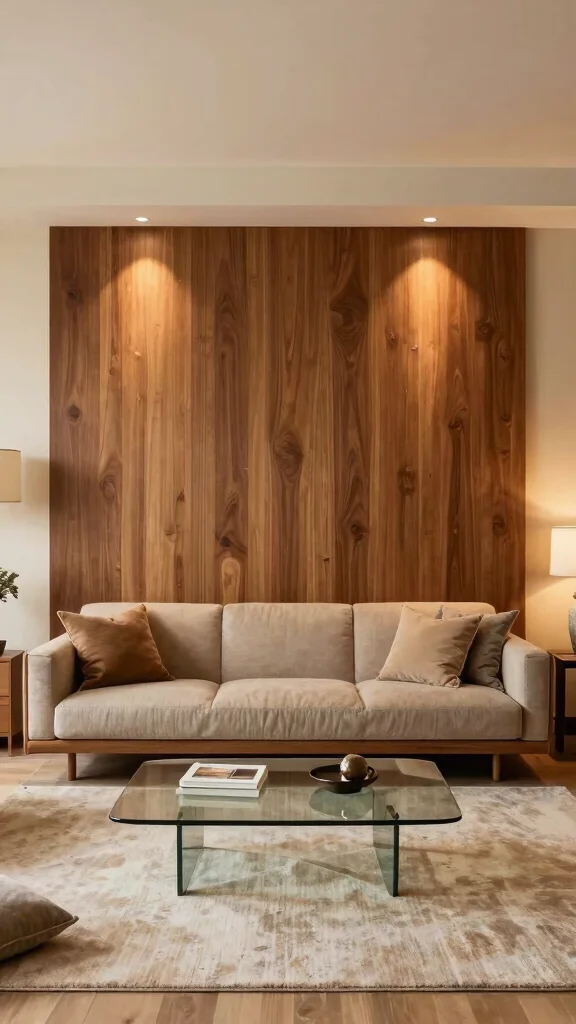
Textured wall panels introduce unique dimension and warmth to your living room, making the walls come alive. Materials like reclaimed wood, sleek metal, or soft acoustic panels can add character and a touch of sophistication. For a cozy vibe, consider wood panels that can be stained or painted to match your decor. Meanwhile, metal panels can bring an industrial edge, perfectly suited for modern settings. Pair these textures with smooth furnishings for an engaging contrast that adds interest.
When incorporating textured panels, look for budget-friendly options at local home improvement stores or online marketplaces. Ensure the materials you choose complement your existing decor, and consider adding focused lighting to showcase the texture. This trend connects with the desire for spaces that feel both stylish and inviting.
Here are some practical tips to integrate textured panels:
– Choose textures that enhance your current design aesthetic.
– Incorporate lighting to highlight the textures, like wall sconces.
– Mix materials for a layered appearance.
– Ensure panels are easy to maintain, especially if you have kids or pets.
This design choice elevates your living space, as the interplay of textures enhances the overall aesthetic.
Fun fact: textured wall panels can reduce room echo by up to 40% in a living room. They add instant warmth with reclaimed wood, metal, or soft acoustic panels. Pair these textures with smooth furnishings for a polished finish in living room wall designs.
Recommended Products

Charming Lazy Black Cat Design: This wall art features a cute black cat in a laid-back pose, surrounded by soft botanical accents. A playful yet elegant addition to your home, perfect for adding a touch of personality and whimsy to your walls.

UNIQUE PEACOCK WALL ART FOR ROOM DECORATION: These Peacock Feather Pictures adding Blue and Green colours to your home décor. Whether you want to put them in your living room, office, kitchen, hallway, or near the TV, they will complement your space with a subtle sense of art and joy.

CLASSICAL WALL ART DECOR: This painting, "Coastal section with surf," is the work of Danish painter Andreas Riis Carstensen, specialized in maritime scenes, notably of Greenland. This painting can add elegant elements to your space
🏡 Transform Your Space Effortlessly
Elevate your living room with our DIY guide filled with stylish decor ideas and budget-friendly makeovers.
3. Gallery Wall Inspiration
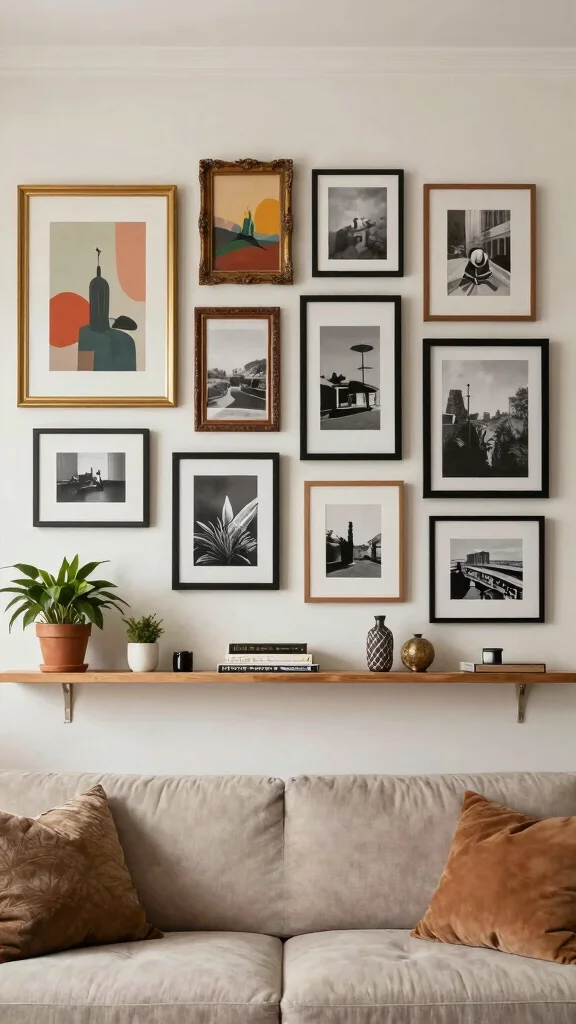
Creating a gallery wall offers a fantastic way to express your personality and style while adding visual intrigue to your living room. By grouping together framed photos, art prints, and decorative elements, you form a captivating focal point that reflects your unique taste. Play with various frame sizes and shapes for a more dynamic and interesting arrangement. Classic black-and-white images can add a timeless touch, while vibrant colors can energize the space. Keep a cohesive theme by using similar frame colors or matting styles to tie your collection together beautifully.
To get started, lay your artwork out on the floor to experiment with arrangements before committing to the wall. Mixing textures and mediums can create added depth, and don’t hesitate to include three-dimensional pieces like small shelves or shadow boxes for extra flair. This trend allows for personal expression, making your space feel more inviting.
Here are some tips for creating a stunning gallery wall:
– Arrange your art on the floor first to find the best layout.
– Use varied textures and mediums for added interest.
– Incorporate 3D elements like shelves for extra dimension.
– Aim for balance by distributing visual weight evenly.
A gallery wall not only enhances your living room’s aesthetic but also showcases your personal story through art and memories.
Recommended Products

Versatile Sizes for Display: Vittanly 15-Pack Multi-Size Picture Frame Set includes 3x 8×10", 6x 5×7", and 6x 4×6" frames. Perfect for showcasing family photos, artwork in living rooms, bedrooms, and offices

Capture Your Memories: From the faces of your loved ones to great times with friends and family get-togethers, this collage photo frame lets you display an array of wonderful moments. It features 12 frames, each perfectly sized for 4×6 photos

Modern Minimalist Style: Our Picture frames are carefully packaged with minimalist art in mind, featuring natural colors such as black, white, and brown. Whether used as wall hangings or desk decorations,the gallery wall frame set is suitable for all seasons. We prioritize the perfect balance of aesthetics and functionality, ensuring a comfortable and natural experience for our customers.
4. Bold Accent Walls
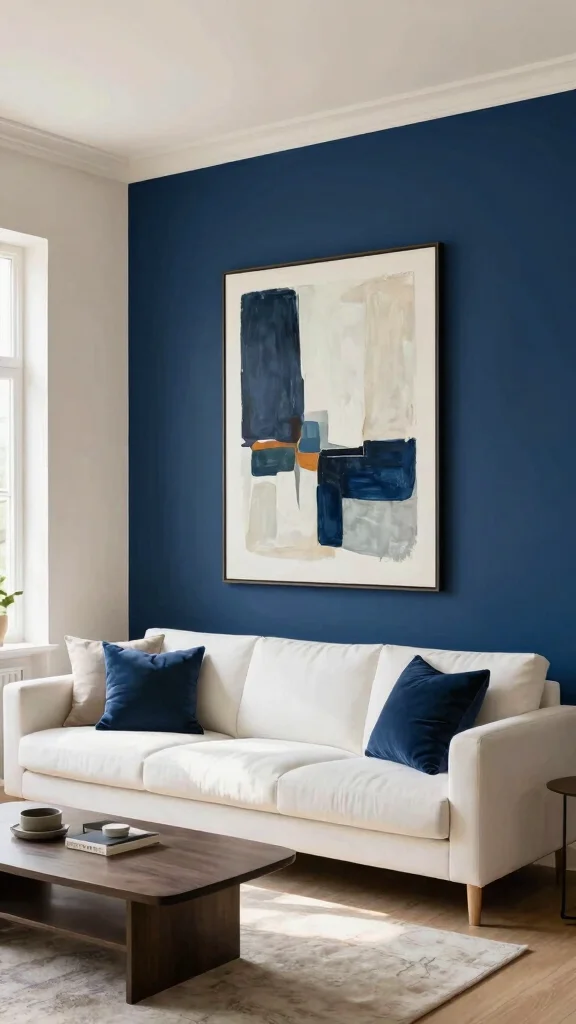
A bold accent wall can dramatically transform your living room, creating an eye-catching focal point that draws attention. By painting one wall in a rich hue, like deep navy, forest green, or bright coral, you can instantly shift the room’s mood and feel more dynamic. This striking choice pairs beautifully with neutral furniture, ensuring the space remains inviting rather than overwhelming. Consider adding artwork that complements or contrasts with your chosen color for a cohesive appearance.
Before committing to your bold choice, test paint samples on the wall to see how they interact with the room’s lighting. High-gloss paint can enhance light and create an interesting reflective effect, while patterns like stripes or geometrics offer creative alternatives to solid colors. This approach aligns with the trend of using color to express individuality in home design.
Here are some practical tips for creating a stunning accent wall:
– Test paint samples to find the perfect shade.
– Use high-gloss paint for a reflective finish.
– Explore patterns like stripes for added flair.
– Don’t overlook the ceiling; a matching color can enhance the effect.
This design element adds vibrancy and character to your space, making it truly memorable.
Recommended Products

Classic Oval Design, Versatile Size: This oval framed canvas wall art measures 8.3" x 12", blending modern and vintage styles to bring a soft, artistic touch to your wall. The unique oval shape stands out from standard prints, making it an eye-catching addition to any decor style, from farmhouse and cottagecore to minimalist and boho.

DIY Fun: comes with 8 sheets of polka dot decals, including 296 irregular dots in diverse colors to meet all your space decorating demands; Unleash your imagination to freely arrange these bohemian dot elements for back to school classroom refresh, first day of school bedroom styling, welcome back to school dorm layout, ready for school playroom makeover and return to school classroom decor; Customize unique collocations to show your exclusive style

Vintage Mallard Duck Wall Decor: This vintage mallard duck wall art features three flying ducks over a water landscape, bringing rustic wildlife charm and natural outdoor beauty to your home. The unique colors and nature inspired design create a calm cottagecore atmosphere perfect for animal and bird lovers
5. Minimalist Wall Art
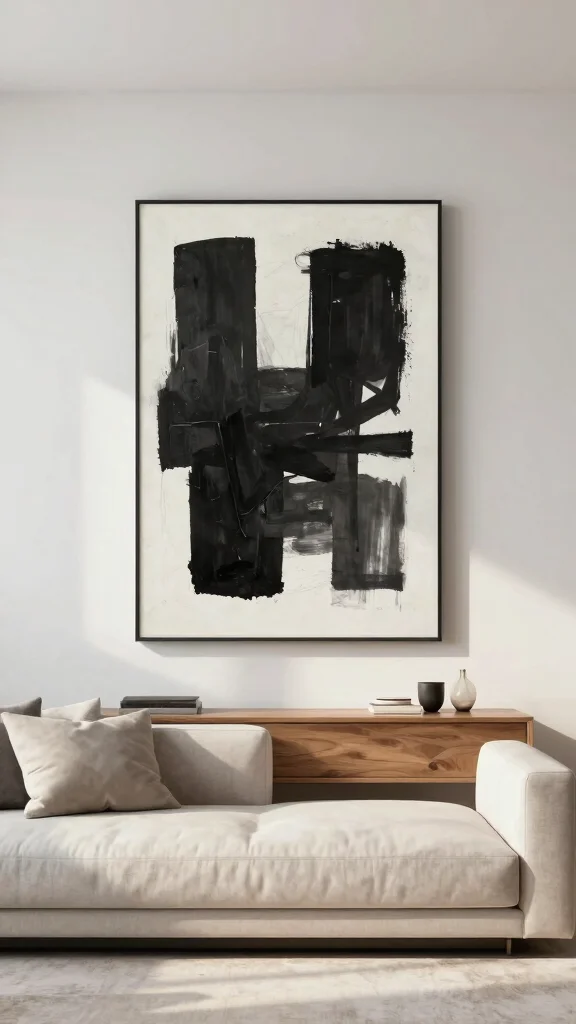
A thoughtfully selected collection of minimalist wall art can elevate the sophistication of your living room. Focus on pieces that embody clean lines and simple forms, such as black-and-white photography or abstract designs with limited colors. This art style maintains an airy and open feel, perfectly aligning with minimalist decor principles. A large statement piece can serve as a striking focal point, surrounded by smaller works to create visual balance.
For maximum impact, consider oversized prints that make a statement without overwhelming the space. Using uniform framing contributes to a cohesive gallery appearance, while a mix of mediums, such as canvas and prints, adds visual interest. This trend speaks to the desire for simplicity and elegance in home design.
Here are some tips for curating minimalist wall art:
– Opt for oversized pieces to create a strong impact.
– Use uniform framing for a polished look.
– Mix mediums for added depth.
– Ensure art is placed at eye level for optimal viewing.
This approach enhances the overall aesthetic, where each piece contributes to a refined and harmonious environment.
Recommended Products

High-Quality Wall Panels: Our acoustic panel set is crafted with high-density polyester fiber, premium medium-density fiberboard, and a solid wood veneer. This combination provides an elegant look, superior sound damping, and excellent sound deadening, significantly improving room acoustics

SPECIFICATION: Each package includes 33 decorative wall panels, each measuring 11.8" x 11.8" (300mm*300mm), covering approximately 32 square feet (𝗡𝗼𝘁 𝗽𝗲𝗲𝗹 𝗮𝗻𝗱 𝘀𝘁𝗶𝗰𝗸,𝗮𝗱𝗵𝗲𝘀𝗶𝘃𝗲 𝗻𝗼𝘁 𝗶𝗻𝗰𝗹𝘂𝗱𝗲𝗱)

30-Day M oney-B ack, HIGH-GRADE 100% Polyester Sheer Voile Fabric.
Key Trade-offs & Our Top Pick
Option 1: Minimalist Color Palette
– Pros:
– Creates a clean and serene atmosphere.
– Easy to pair with modern furniture and decor.
– Cons:
– Can feel cold or sterile if not accessorized well.
– Limited color options may not suit everyone’s taste.
– Best for: Those seeking a calm and uncluttered living room that emphasizes simplicity.
Option 2: Textured Wall Panels
– Pros:
– Adds depth and interest to flat walls.
– Available in various materials like wood, metal, and fabric.
– Cons:
– Installation can be complex and time-consuming.
– May require maintenance or replacement over time.
– Best for: Homeowners looking to make a strong design statement without overwhelming the space.
Option 3: Gallery Wall Inspiration
– Pros:
– Showcases personal art collections and memories.
– Allows for creativity and customization.
– Cons:
– Can look cluttered if not well-planned.
– Requires regular updates to keep it fresh.
– Best for: Those who enjoy changing their decor frequently and want to express their personality.
Option 4: Bold Accent Walls
– Pros:
– Creates a focal point in the room.
– Offers an easy way to incorporate trendy colors.
– Cons:
– Might clash with existing decor if not chosen carefully.
– Can be overwhelming if the color is too bold.
– Best for: People looking to add drama and flair to their living space.
Option 5: Decorative Wall Panels
– Pros:
– Stylish option that can enhance sound insulation.
– Variety of designs to fit any theme.
– Cons:
– Can be pricey depending on materials used.
– Installation may require professional help.
– Best for: Those wanting a high-end look without the commitment of major renovations.
Expert Recommendation:
Best Overall: Textured Wall Panels
Textured wall panels stand out as the best overall choice because they combine aesthetic appeal with practicality. They not only elevate the room’s design but also enhance its acoustic properties. Whether you choose wood, fabric, or metal, the variety allows you to adapt to different styles, making these panels a versatile option that can last for years. ✔
Why We Picked This:
While textured wall panels are our top pick, you may find other options appealing based on your needs. If simplicity is your goal, a minimalist color palette might suit you better. On the other hand, if you love displaying memories, a gallery wall can add a personal touch. Bold accent walls might capture your attention if you’re looking for something striking. The key is to choose what resonates with your style and living space. 💡
Recommended Products

Neutral Minimalist Art Size: 12×16 inch or 16x24inch. UNFRAMED

[Framed Wall Art]: A set of 3 contemporary framed minimalist neutral abstract wall art, each with a size of 16" W x 24" H. The total size when the 3 pieces are hung is 24" H x 48" W. Each painting comes with a solid wood frame
6. Reclaimed Wood Features
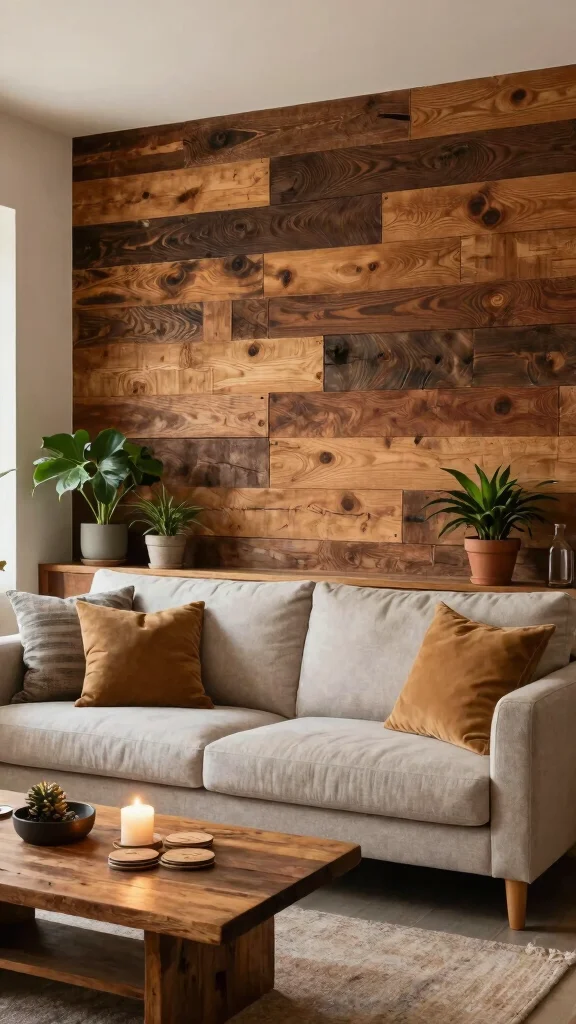
Reclaimed wood brings character and warmth to your living room walls, offering a sustainable and stylish option. This eco-friendly material contributes to a rustic charm while providing a unique texture that can make your space feel homey. Whether you choose full wall paneling or a smaller accent area, reclaimed wood creates a stunning backdrop, especially when paired with modern furnishings. Consider a wood feature wall behind a sofa or fireplace to create a captivating focal point.
To achieve this look, select wood pieces with interesting grains and colors for added visual intrigue. Sealing the wood will protect it from wear, ensuring longevity, while mixing in metal elements can balance the natural warmth. This design trend highlights the beauty of nature indoors.
Here are some tips for incorporating reclaimed wood:
– Choose pieces with unique grains for visual interest.
– Seal wood to protect against moisture.
– Mix metal accents to balance warmth.
– Use soft lighting to enhance the wood’s natural beauty.
This approach adds depth to your living space, where the interplay of textures creates an inviting atmosphere.
Reclaimed wood isn’t just beautiful—it’s a sustainable choice that adds instant texture to living room wall designs. Start small with a panel behind your sofa, then mix with modern pieces for a striking, cozy focal point.
Recommended Products

🖼️ [ELEVATE YOUR DECOR WITH TIMELESS ELEGANCE] : Transform your space with captivating modern wall sculptures designed to enhance any room. Crafted with meticulous attention to detail, these pieces effortlessly combine artistry and sophistication, creating a stunning focal point for your home decor.


【Premium Quality & Durability】Made from high-grade iron with a sturdy construction, these metal wall arts are built to last. The blue finish resists fading and wear, ensuring vibrant beauty for years to come.
You might also like
7. Geometric Patterns
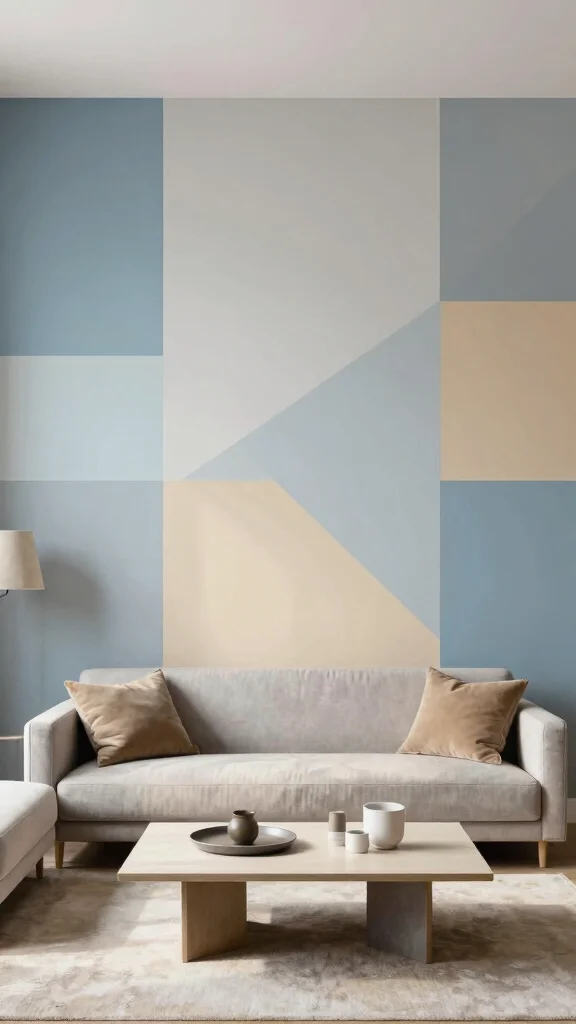
Geometric patterns bring a modern touch to your living room, adding style without overwhelming the senses. Through wallpaper or painted designs, these shapes create visual intrigue and can even give the illusion of depth. Opt for squares, triangles, or hexagons in colors that complement your overall palette to enhance the decor. Consider using geometric patterns to highlight specific areas, such as behind a sofa or entertainment unit for added focus.
For an easy update, removable wallpaper is a great option if you like to change your look often. Keep furniture and decor simple to avoid clashing with the patterns, and vary shapes for a more artistic vibe. This trend speaks to the desire for contemporary, clean-lined living spaces.
Here are some tips for working with geometric patterns:
– Use removable wallpaper for easy updates.
– Keep furnishings simple to avoid competition with patterns.
– Mix shapes for a creative touch.
– Ensure consistent spacing for a polished look.
This design choice adds excitement and energy to your space, creating a visually stimulating environment.
Recommended Products
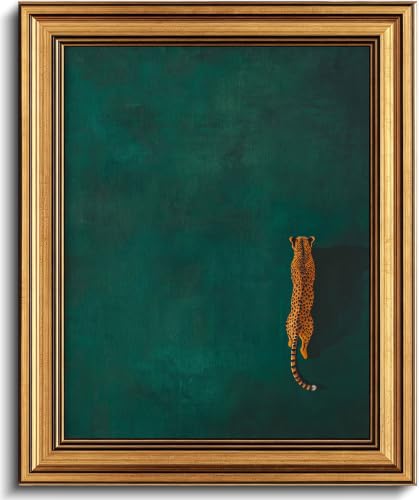
3D Textured Cheetah Wall Art: Capture the silent majesty and sleek elegance of the wild with this vintage-inspired cheetah wall art, blending untamed natural beauty with sophisticated modern luxury. The unique single animal on solid color design delivers a bold, high-end aesthetic that brings intellectual depth, adventurous spirit, and quiet sophistication to any space. It perfectly complements minimalist, contemporary, glam, and modern luxury home styles with effortless refinement
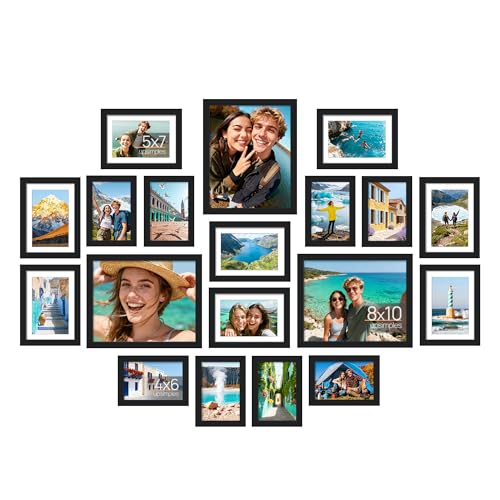
【Durable Material】Our collage frame is made of well made wood frame. Comes with a plastic cover, which provides a clear view of photos and is lighter than glass. No need to worry about hurt by glass broken.

【Durable Material】Our collage frame is made of well made wood frame. Comes with a plastic cover, which provides a clear view of photos and is lighter than glass. No need to worry about hurt by glass broken.
8. Floating Shelves
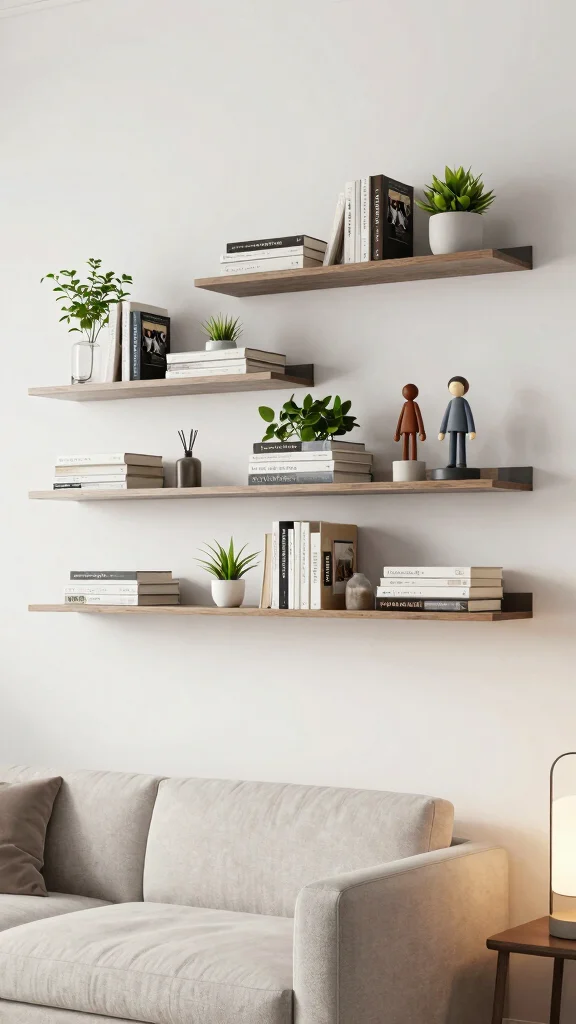
Floating shelves offer a chic and versatile way to showcase decor while enhancing your living room walls. These shelves can display everything from books to plants to art pieces, creating a stylish showcase that feels airy and open. The beauty of floating shelves lies in their ability to create the illusion of more space, allowing items to appear as if they are effortlessly floating. Thoughtfully arranging your items can reflect your personal style while adding a functional element.
Choose a wall color that contrasts with the shelves for a more dramatic effect, and mix heights and sizes of items for an engaging display. Keeping your arrangement uncluttered will maintain a minimalist aesthetic. This trend emphasizes simplicity and functionality in home decor.
Here are some tips for incorporating floating shelves:
– Mix heights and sizes for a dynamic display.
– Use a level to ensure shelves are straight.
– Incorporate small plants for a touch of greenery.
– Keep arrangements simple to maintain an airy feel.
This design option not only enhances your aesthetic but also showcases your personality through your choice of decor.
Recommended Products

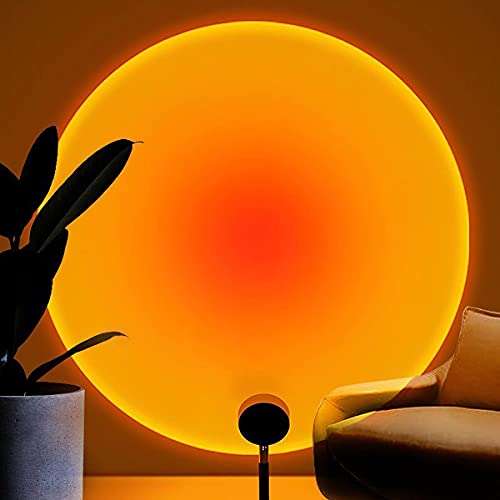
【Stable and Durable】- Made of high quality aluminum. The lamp is always stable thanks to the stable base and lamp mast. The energy-efficient, glare-free LED lamp has a long service life.

Emotional Connection – Capture the nostalgia of epic journeys with this vintage-style Middle Earth map. More than just wall decor, it inspires imagination and admiration for fantasy storytelling, making it a standout piece for fans of mythical worlds.
9. Painted Murals
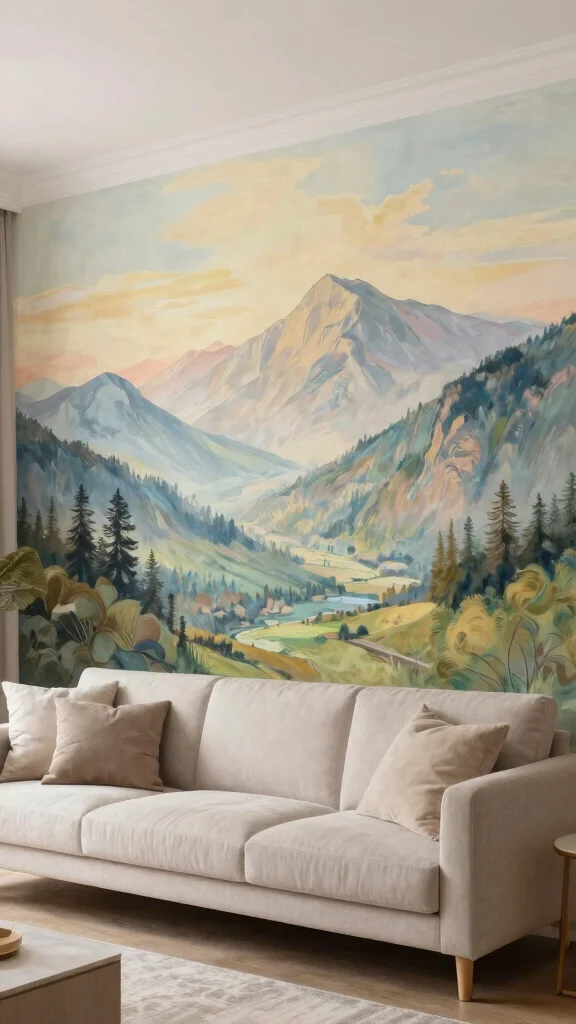
A painted mural can transform a simple wall into a stunning work of art, allowing for complete creative expression. Whether you prefer bold graphics or serene landscapes, murals can set the mood for your living room and become a captivating focal point. Select a style that resonates with your personality, like abstract watercolors for a bohemian vibe or a tranquil nature scene for a calming effect. Collaborating with a professional artist ensures a polished finish, but DIY kits and stencils are available for those who want to try their hand at it.
When planning your mural, consider size and placement to ensure it fits harmoniously within the space. Using quality paint will enhance durability and vibrancy, while simpler designs work better for minimalist preferences. This trend highlights the importance of personalization in home design.
Here are some tips for creating a mural:
– Plan size and placement carefully for harmony.
– Use quality paint for lasting vibrancy.
– Stick to simpler designs for a minimalist look.
– Prepare the wall properly for the best results.
This creative approach adds depth and character to your living space, where art becomes an integral part of your decor.
10. Soft Wall Colors
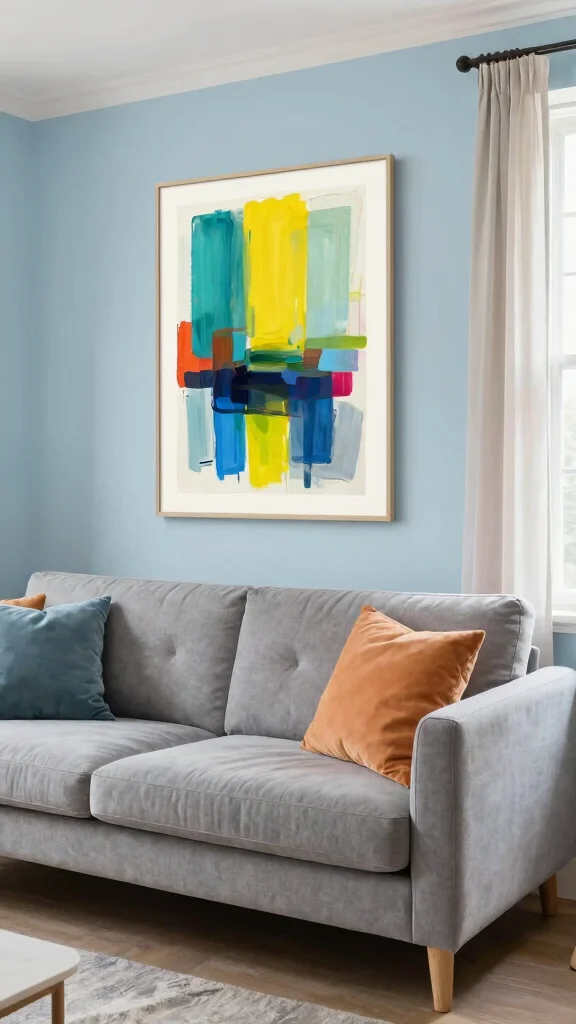
Soft wall colors can create a peaceful and inviting environment in your living room. Shades like pale blues, soft greens, or light pastels make the space feel airy and spacious, encouraging relaxation and tranquility. These gentle hues can help reduce stress, making them perfect for unwinding after a busy day. To create beautiful contrast, pair soft walls with darker furniture pieces that add depth to the room. Decorative elements like bright trims or colorful artwork can pop against these soothing shades, adding layers of interest.
Before finalizing your color choice, test different shades in the room, as lighting can significantly affect their appearance. Opt for matte finishes to achieve a soft, understated look, and use varying tones within the same color family for a cohesive feel. Incorporating natural elements, such as plants, can further enhance this gentle aesthetic.
Consider these tips when selecting soft wall colors:
– Test shades in the room for accurate results.
– Choose matte finishes for a subtle appearance.
– Use various tones for a harmonious look.
– Add greenery to complement the soft colors.
This design choice fosters a serene atmosphere, where the calming effect of soft colors enhances your living experience.
11. Wall Decals
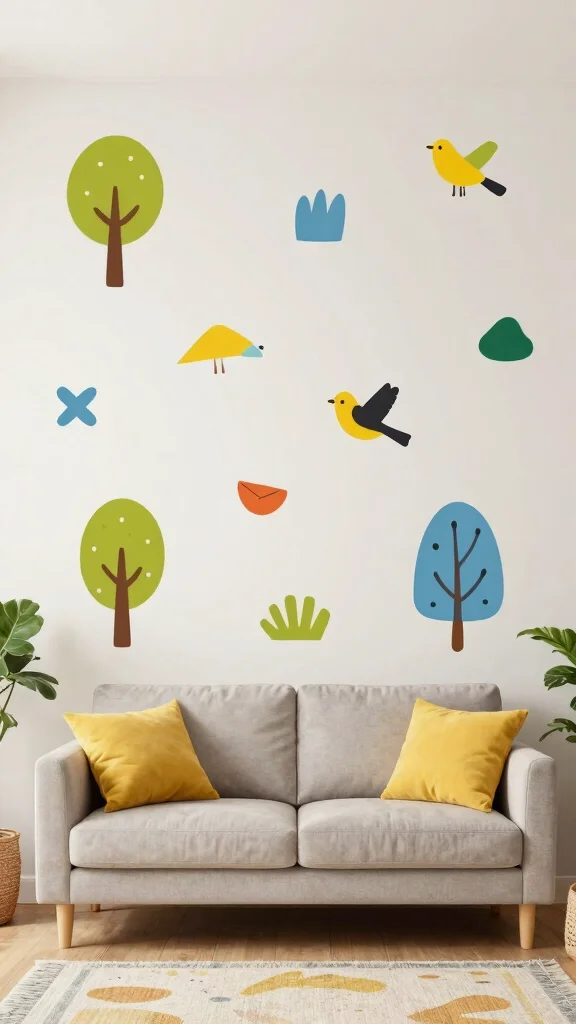
Wall decals provide a fun and flexible way to infuse personality into your living room walls without the permanence of paint. These adhesive designs come in a variety of styles, from whimsical patterns to motivational quotes, making them ideal for renters or those who like to refresh their decor often. Decals can be used to create a feature wall or scattered throughout the room to unify various design elements.
When choosing decals, look for high-quality materials to ensure they last, and opt for removable options that won’t damage your walls when it’s time for a change. Whether you prefer a planned pattern or a more casual arrangement, these decals can enhance your space with minimal effort. This approach aligns with the trend of incorporating playful elements into home design.
Here are some tips for using wall decals:
– Select high-quality decals for durability.
– Choose removable options to protect your walls.
– Arrange them in a planned or casual style based on your preference.
– Use decals to highlight specific areas, like a cozy reading nook.
This design element adds charm and character, allowing you to personalize your space effortlessly.
You Might Also Like
12. Multi-Functional Walls
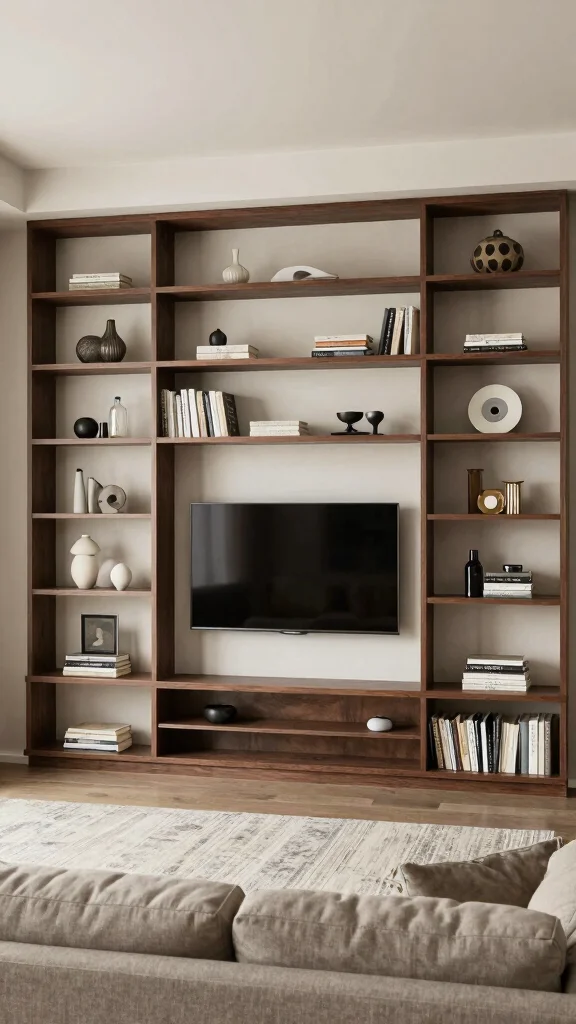
Multi-functional walls serve both aesthetic and practical purposes, making them a smart choice for modern living spaces. By integrating bookshelves, TVs, and artwork into a single wall, you create an organized appearance while saving valuable floor space. A well-designed wall unit can house books, decorative items, and technology, ensuring everything has its place and keeping your room tidy.
To create a cohesive look, use a color scheme that complements the rest of your room, and consider incorporating sliding panels to hide electronics when not in use. This trend emphasizes the importance of functionality in contemporary design, making your space not only beautiful but also efficient.
Here are some tips for designing multi-functional walls:
– Create custom shelves to fit your storage needs.
– Use a cohesive color scheme to enhance unity.
– Incorporate sliding panels to conceal electronics.
– Use lighting to highlight specific areas, like art pieces.
This design choice maximizes your living space while providing a stylish and organized environment.
13. Layered Textures
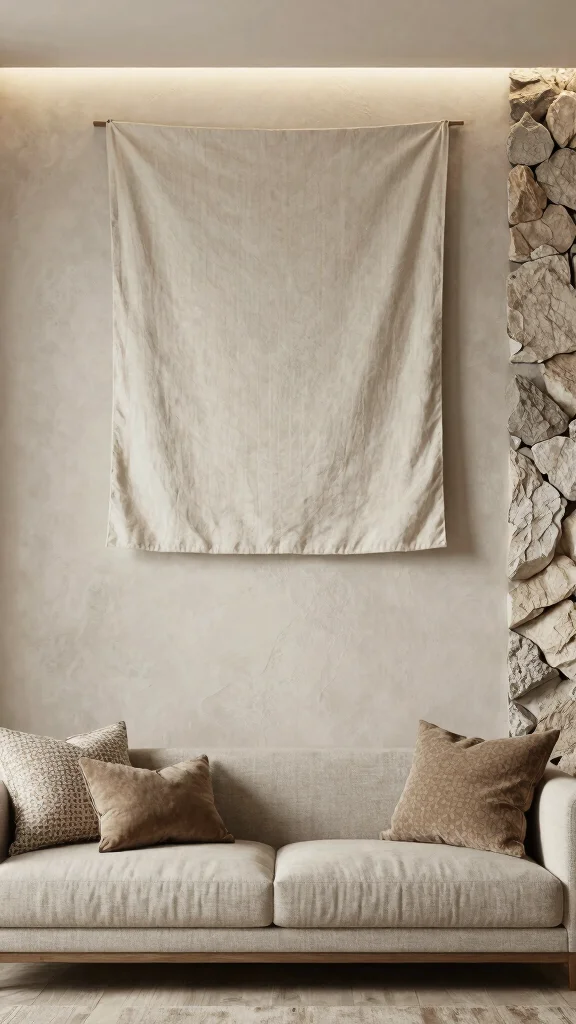
Layering textures on your living room walls can create a rich, inviting atmosphere that feels both stylish and cozy. This can be achieved by combining materials like fabric wall hangings, stone accents, or textured wallpaper, adding depth and warmth to your space. For instance, a stone feature wall paired with soft fabric accents creates a beautiful contrast that enhances the room’s overall character.
When selecting textures, choose those that complement each other; too many different textures can clash and detract from your design. Keeping a cohesive color palette will help maintain focus on the various layers, while strategic lighting can enhance the texture’s visual appeal. This trend connects to the broader desire for creating cozy, tactile living spaces.
Consider these tips for incorporating layered textures:
– Choose complementary textures to avoid clashing.
– Maintain a cohesive color palette for focus.
– Use lighting to showcase different surfaces.
– Experiment with various layers for the perfect balance.
This design approach enriches your living space, inviting warmth and comfort through the interplay of textures.
14. Incorporating Plants
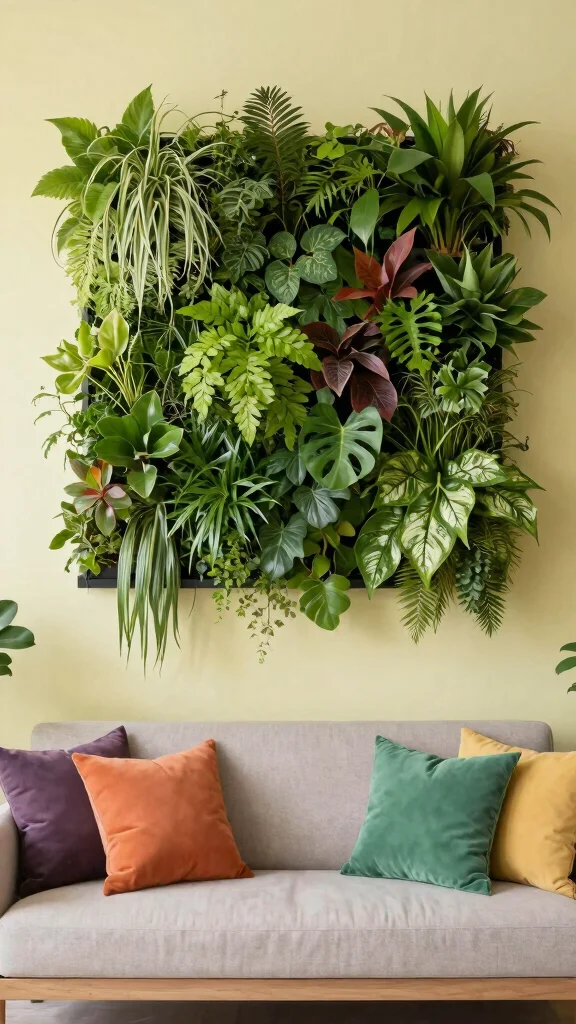
Bringing plants into your living room wall design infuses life and freshness into the space, creating a vibrant atmosphere. Vertical gardens or wall-mounted planters make for stunning visual elements while improving air quality. Opt for low-maintenance plants like succulents or ferns that thrive indoors and require minimal care. Incorporating greenery as part of your wall decor adds color and texture, breaking up the solidity of plain walls for a refreshing look.
Experiment with a variety of plant sizes and types for visual interest, and ensure your plants receive ample lighting to flourish. Pairing plants with other wall decorations creates a cohesive, multi-dimensional aesthetic that enhances your living space. This trend reflects the growing appreciation for nature in home decor.
Here are some tips for incorporating plants into your wall design:
– Use a mix of plant sizes for visual intrigue.
– Ensure adequate lighting for plant health.
– Combine plants with other decor for depth.
– Consider self-watering systems for easy maintenance.
This element not only enhances your decor but also connects you to nature, enriching your living environment.
Fun fact: Wall-mounted plants can boost perceived room height by up to 15% in minimalist living room wall designs. Add a mix of succulents and ferns on vertical planters for a vibrant, calming focal point that instantly reads polished.
Conclusion
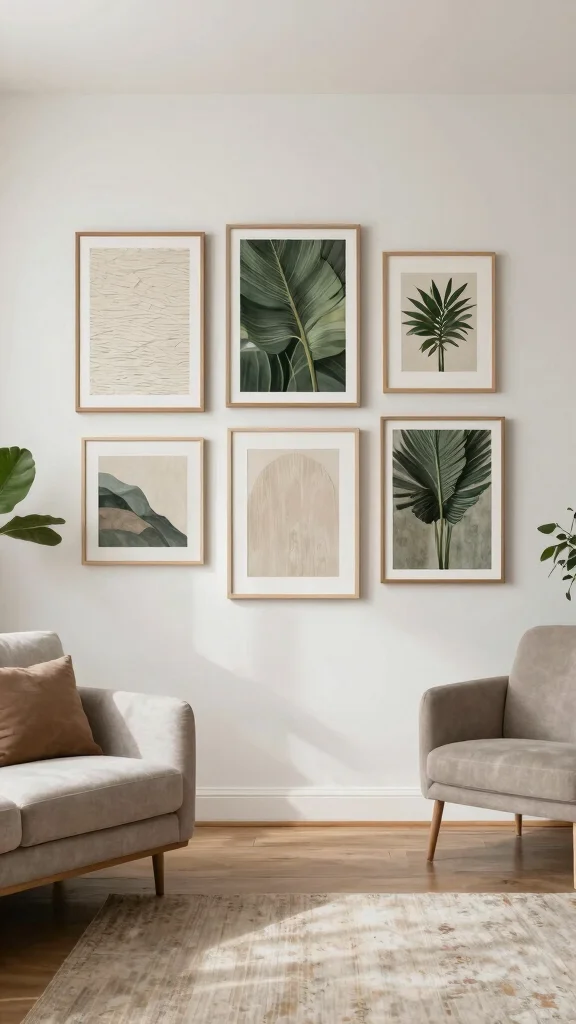
Transforming your living room walls can significantly enhance the overall aesthetic and feel of the space.
By incorporating these minimalist design ideas, we’re not only improving our decor but also infusing our personalities into our homes.
Consider which styles resonate most with you and how they can reflect your taste—whether it’s through bold accents or soft hues. Remember, a polished look starts with thoughtful design choices.
Frequently Asked Questions
What are the top living room wall designs for a polished, minimalist look?
To achieve a polished minimalist vibe in your living room wall designs, start with a calm base: neutral wall colors and clean lines on furniture.
Create an accent wall idea with a subtle texture or a single bold paint hue, not busy patterns.
Add one or two pieces of modern wall art with generous negative space.
Use decorative wall panels for dimension without clutter.
Build a gallery wall inspiration by arranging a grid of similarly framed pieces, or keep it simple with a single statement artwork.
Finally, choose a direction from wall color trends that fits your space. The aim is living room wall designs that feel calm, cohesive, and polished.
How can I incorporate modern wall art without clutter in a minimalist living room?
Great question! In minimalist spaces, less is more for living room wall designs with modern wall art.
Start with one large focal piece and add only 1–2 smaller works if they balance the composition.
Choose frames in the same finish for a cohesive look and mount art at eye level for comfortable viewing.
Keep generous spacing between pieces to preserve negative space and avoid clutter.
If you want a gallery vibe, use a simple grid with identical mats and frames to keep the look intentional.
Are accent wall ideas worth it for a minimalist living room, and which colors or textures work best?
Accent wall ideas can anchor a minimalist living room wall designs when done right.
Choose texture over loud patterns: smooth plaster, a soft wallpaper texture, or a matte paint with subtle nuance.
Color-wise, gravitate toward warm neutrals (greige, taupe) or cool pale blues-gray; avoid busy contrasts that fight with furniture.
In small spaces, lighter tones on the accent wall can make the room feel bigger; in larger rooms, a slightly deeper shade adds depth.
Pair the accent with minimal art and a clean silhouette on furniture to keep the space balanced.
What are decorative wall panels and how do I use them with other wall elements?
Decorative wall panels are 3D textures, wood slats, or perforated designs that add depth without visual clutter in living room wall designs.
Use them on one focal wall and keep the surrounding walls painted in a calm neutral to let the panels shine.
Match panel color or finish to the furniture for cohesion, and keep other wall elements minimal—one piece of art or a slim floating shelf will do.
Consider lighting to highlight texture, and if the panels are heavy, hire a pro for safe mounting.
How can I build a cohesive gallery wall inspiration while keeping a minimalist vibe, and what wall color trends should I follow?
A cohesive gallery wall inspiration starts with a limited color palette and uniform framing to align with living room wall designs.
Plan the layout with a template first, decide between a strict grid or a more relaxed salon style, and anchor with a larger piece placed at eye level.
Keep spacing fairly tight (about 2–3 inches) and avoid overloading the wall so the layout reads calm.
For wall color trends, lean toward soft neutrals with warm undertones (greige, alabaster, soft taupe) that play well with decorative wall panels and modern wall art.
Finish with minimal frames and let the artwork do the talking, ensuring your gallery wall inspiration enhances your living room wall designs rather than competing with them.
Related Topics
home decor
living room wall designs
minimalist design
modern wall art
accent wall ideas
decorative wall panels
gallery wall inspiration
wall color trends
easy updates
budget friendly
interior styling
trending designs
Leave a Reply